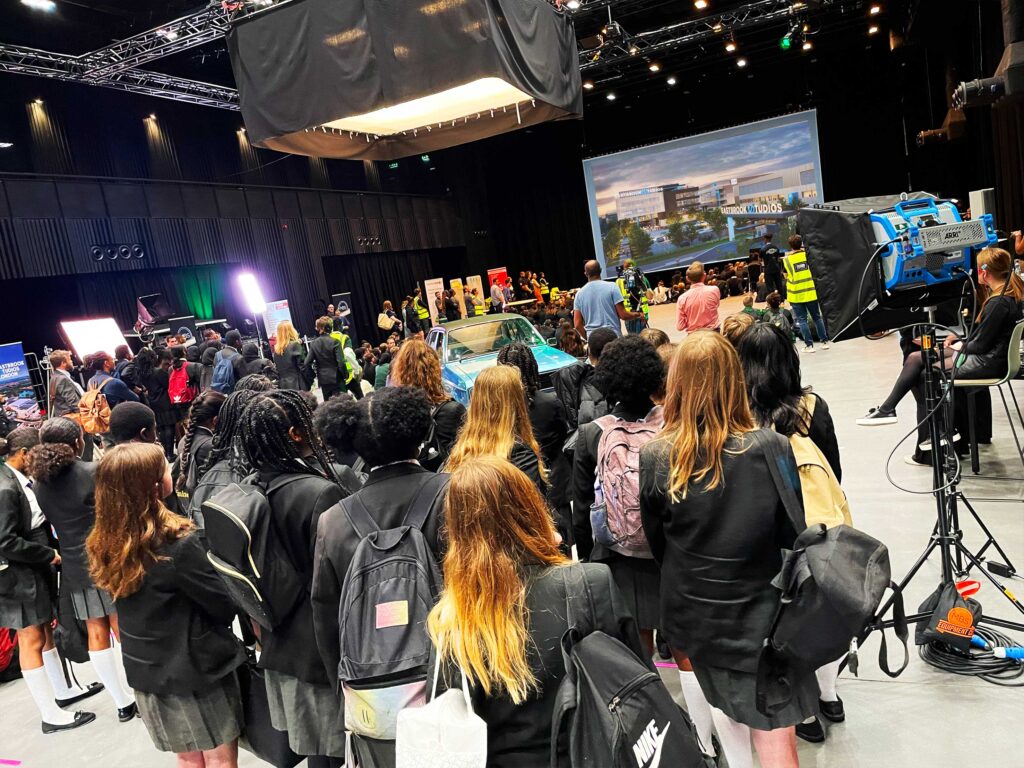

From January to July 2025 the Food Education Programme/LBBD worked with School Food Matters to deliver two food enterprise programmes, Young Marketeers and Know Your Onions. This is the third year Barking and Dagenham Council has been in partnership with School Food Matters who give schoolchildren the opportunity to learn about food production, grow their own veg, and set up a stall at Barking market. Around 1,361 children and 24 teachers and teaching assistants took part in the projects across ten schools, which is an increase of roughly 120 children from last year. The programme culminates in a market day when all of the “Young Marketeers” sell the produce they have grown in their school gardens.
All proceeds from the market day go to local food surplus and redistribution charities, there is an opportunity for children to understand the power of community engagement in tackling food poverty, giving children the opportunity to learn about food waste and make a positive contribution to a community organisation that prevents food poverty.
Dorothy Barley Primary School
This school had a challenging start due to a loss of confidence from last year. Their allotment area had been damaged by young foxes, making it an unusable and uninviting space for both staff and children. However, the children remained curious and enthusiastic, especially fascinated by the wildlife they encountered — including discovering newts and a large number of snails. This interest sparked conversations about the benefits of wildlife and the importance of encouraging biodiversity in the growing space. Schol Food Matters expert gardeners offered the school an extra planting session, which proved a turning point. Teachers and children felt re[1]energised and hopeful as they saw their plants grow. The gardening sessions supported school staff to keep momentum, adding good compost, natural wildlife deterents and trying to find more time to develop the space. Teachers and children felt re[1]energised and hopeful as they saw their plants grow. The children took real ownership and responsibility to support sustainable gardening and future planning.
Planters and tripods at Dorothy Barley Junior Academy
Project Display at Dorothy Barley Junior Academy
Impact
Employability Skills
By selling their school grown fruit and veg at market day, schools raised a total of £531. A range of vegetables were grown and sold on Market Day including beetroot, lettuce, carrots, spring onions, herbs, courgettes and tomato plants. Planted sunflowers and dried wildflowers were great sellers – ‘best bunches in Dagenham’ as the children called out to attract local punters.
Following their involvement in the programme, children are more aware of and interested in career paths in cheffing, horticulture and food retail. Most teachers reported improved employability skills (53%) and improved enterprise skills (66%).
Most children (81%) said that they had learned a new gardening skill, and most (79%) said that they were more interested in gardening after taking part in the programme. “I learned new techniques of gardening like watering below the soil. I am going to teach my mum!” Child, Marsh Green Primary
A teacher from John Perry Primary said that the most important part of the project was ‘the teamwork and confidence building, seeing them working together, talking about starting their own business, all inspiring future business owners.’
“I’ve learned about how to talk to customers!” – Child, Valence Bonham Primary
Children also learned about the nutritional benefits of different foods, and how food is produced.
“Food makes you strong and you should taste new things” – Child, St Peter’s RC Primary
Teachers saw the same set of benefits in their children – 93% of teachers surveyed thought that children had a better understanding of where their food came from, and over half (60%) thought the programme gave children a greater understanding of healthy eating.
“Seeing them talk to customers today, I can tell they’re enjoying it and it’s been great to hear them saying that the produce is organic and that we’ve not used fertiliser!” Teacher, Marsh Green Primary
“It’s given children more opportunities and different reasons to be outside. We’ve also seen them take more value and care over the plants they have grown during the project.” – Teacher, Marsh Green Primary
When asked what they thought the most important part of the project is, a teacher from Valence Bonham Primary School said:
‘the children benefit through their mental health, new skills, working as a team, learning to grow food from seeds and learning the journey of food from the ground to food. We’re using the food we’re growing in our school kitchen too! Anything we don’t sell today will go there.’
80% of teachers thought that children were more familiar with and willing to eat a wider range of fruit and vegetables.
“They loved the hands-on approach with the planting and the students really enjoyed picking spinach which I thought was surprising as many of them were also eating it raw.” Teacher, Sydney Russell School